2026-10-19 · also on lulucy.org
Building a DIY scanner to read 2,000-year-old scrolls that can't be unrolled
In AD 79 Vesuvius buried a library.
About eighteen hundred scrolls, in a villa in Herculaneum that probably belonged to Julius Caesar's father-in-law. The heat didn't burn them so much as bake them. They turned to charcoal, still rolled up. Every time someone tries to unroll one, it crumbles.
So for more than two hundred and fifty years since they were dug up, they've mostly just sat there. A library you can hold but can't read.
The Vesuvius Challenge is the attempt to read them without opening them. You CT scan the scroll at a particle accelerator, follow each wrap of papyrus through the 3D volume, flatten it out, then train a model to spot where the ink is. In 2023 it worked well enough that people read whole columns of a scroll for the first time in two thousand years.
From October 2023 to the end of that year, I spent almost all of my time on it, and I kept going back long after. (I wrote a short post about it back then: Ancient Scrolls.)
Everyone keeps saying the scroll is 3D.
But it's really 2D.
Writing is a 2D thing.
We just fold it 3D.
And the fold isn't arbitrary. It isn't a symmetrical cylinder or a rolled-up carpet. There's one specific face we care about, and it's wrapped around itself hundreds of times.
The deeper I got, the more my questions stopped being about code and started being about stuff. What does papyrus actually look like up close? Is the crackle in the scans ink, or just the fibres? Does ink sink into the next layer when it's heated? Do we even know what blank papyrus from back then looks like?
Nobody could hand me a Herculaneum scroll to check. So I made one.
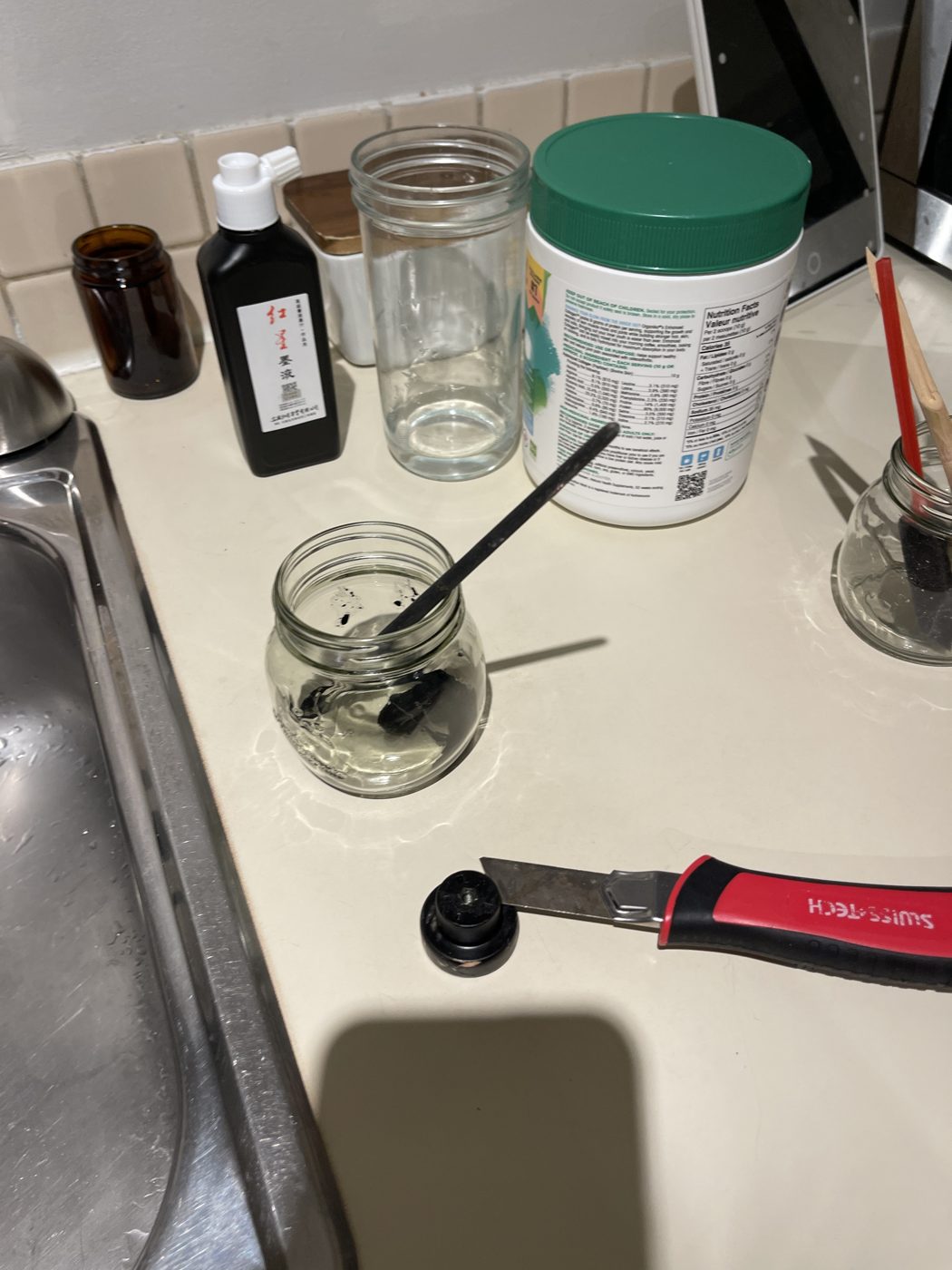
The ink matters most. The Herculaneum scribes used carbon ink: soot and gum. That's the whole problem. Carbon ink on carbonised papyrus is carbon on carbon, and in an X-ray it barely shows up. So I used a carbon ink too, with reed pens, because the pen changes the stroke and the stroke changes what the model learns.
All of it came from Amazon. Papyrus, reed pens, a bottle of ink. Two thousand years ago this was a whole industry along the Nile. Now it's a two-day delivery and a box, and I used the box too.
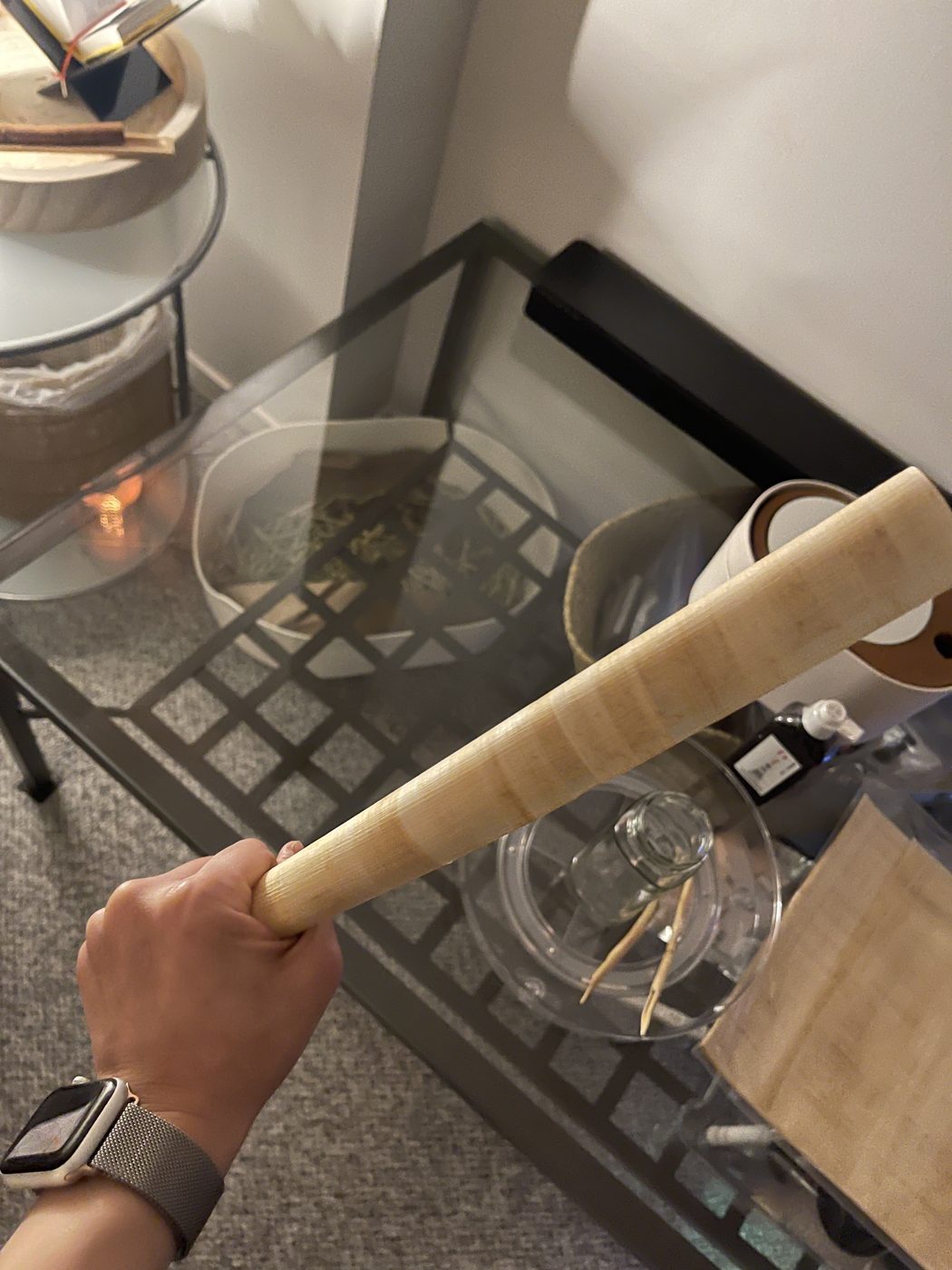
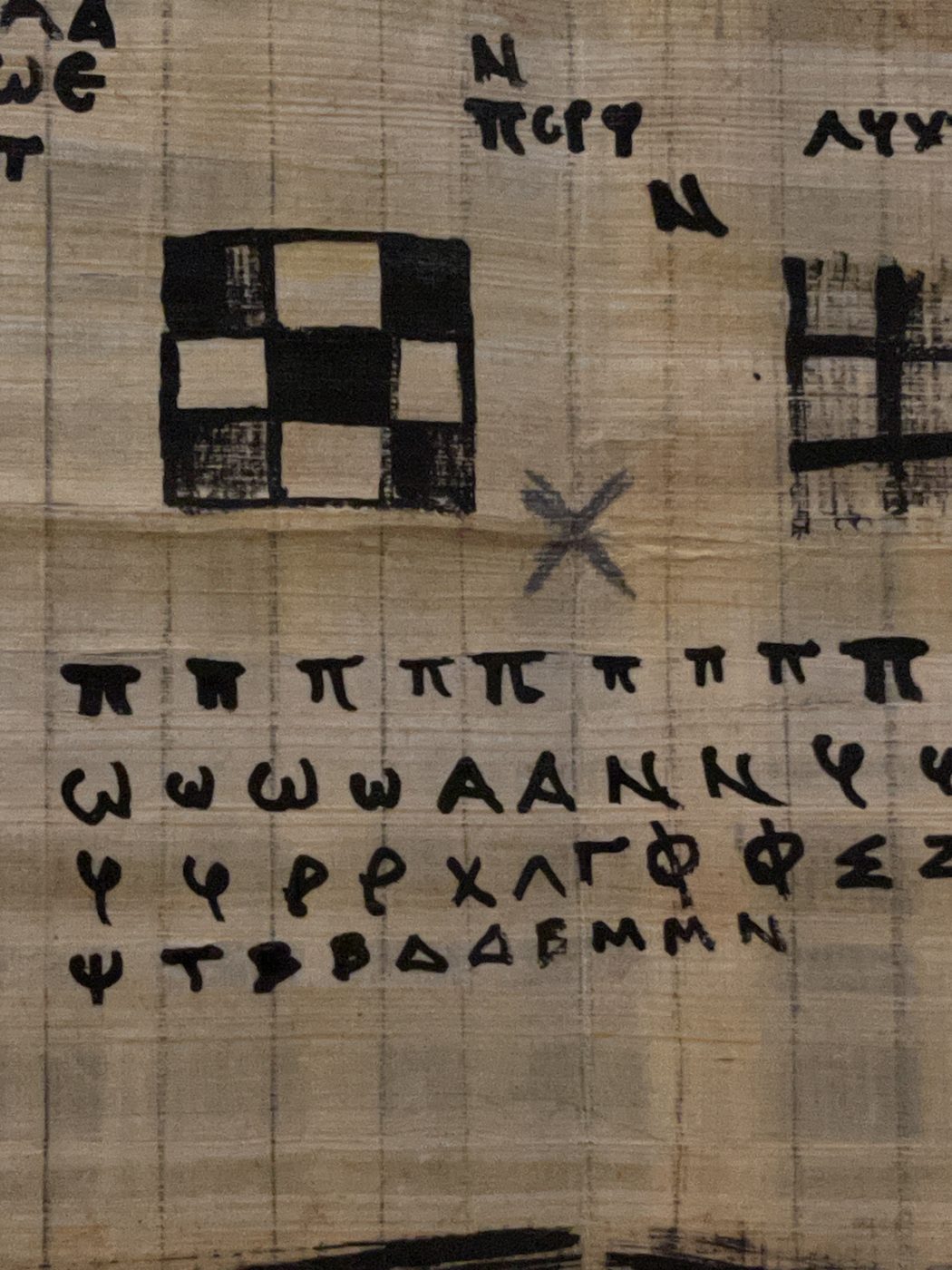
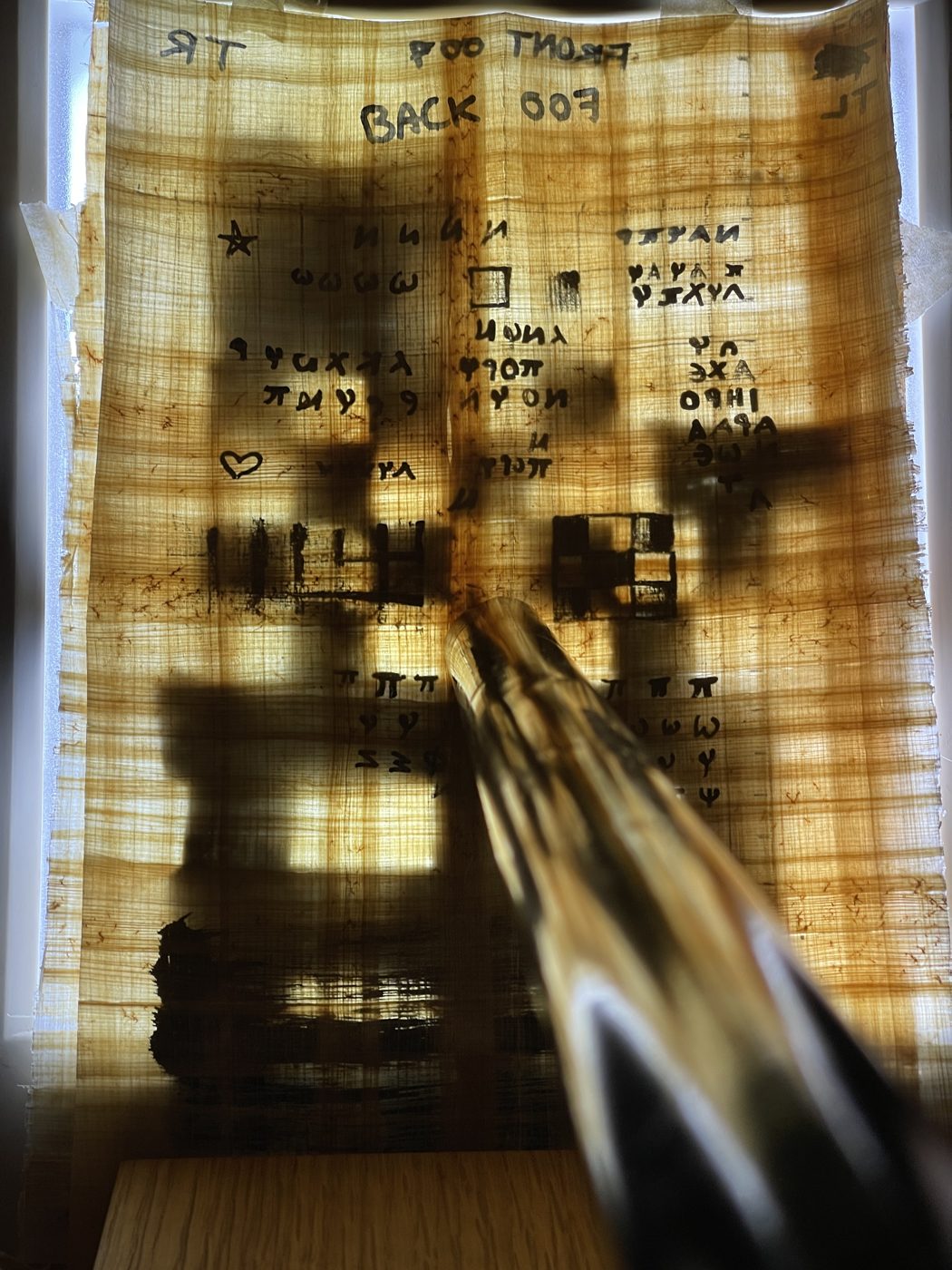
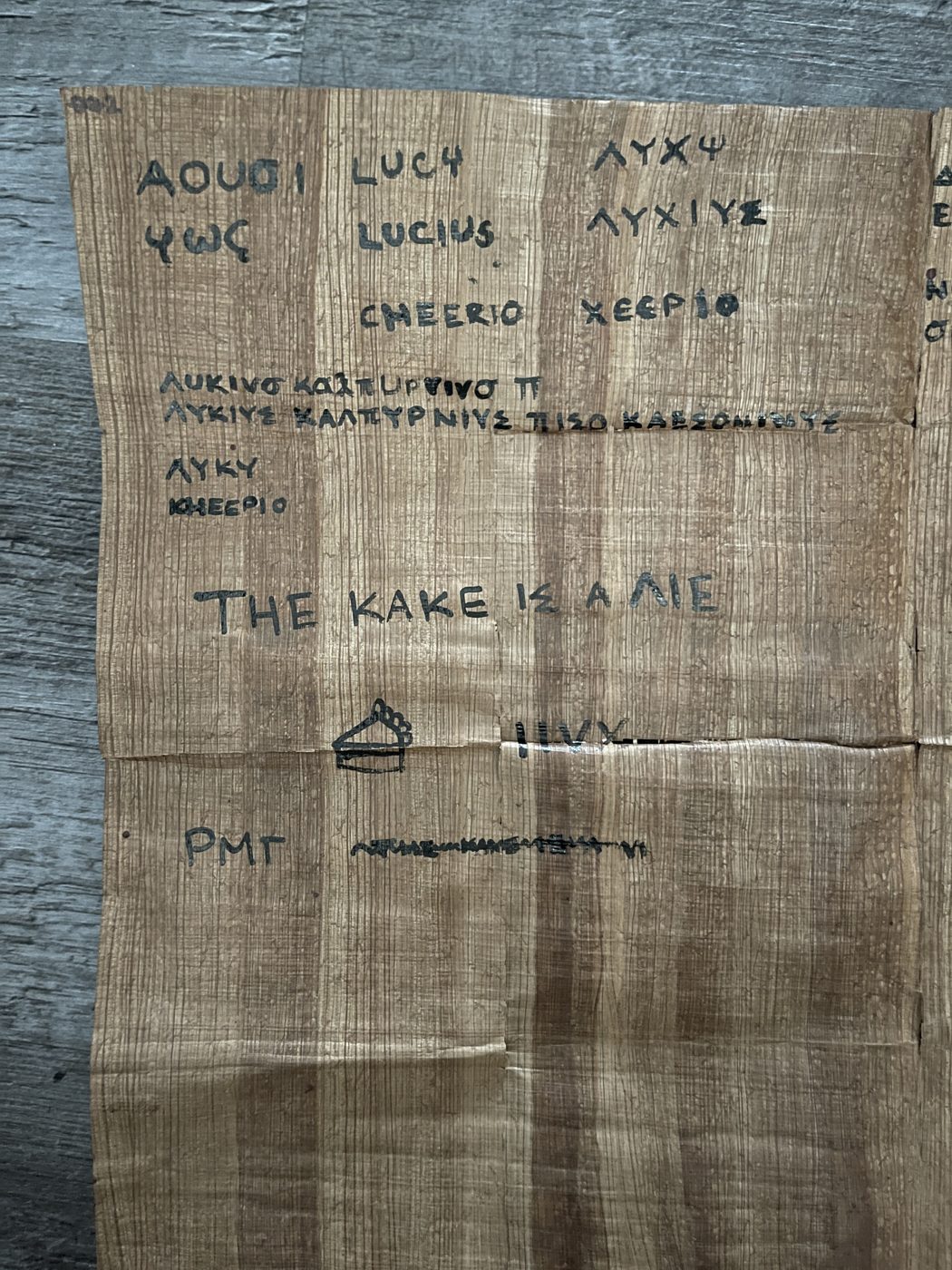
Here's the slightly embarrassing part. I wrote nonsense.
It's nonsense on purpose. A test target has to be easy to recognise when it comes back out the other side, so I wanted things I'd know at a glance:
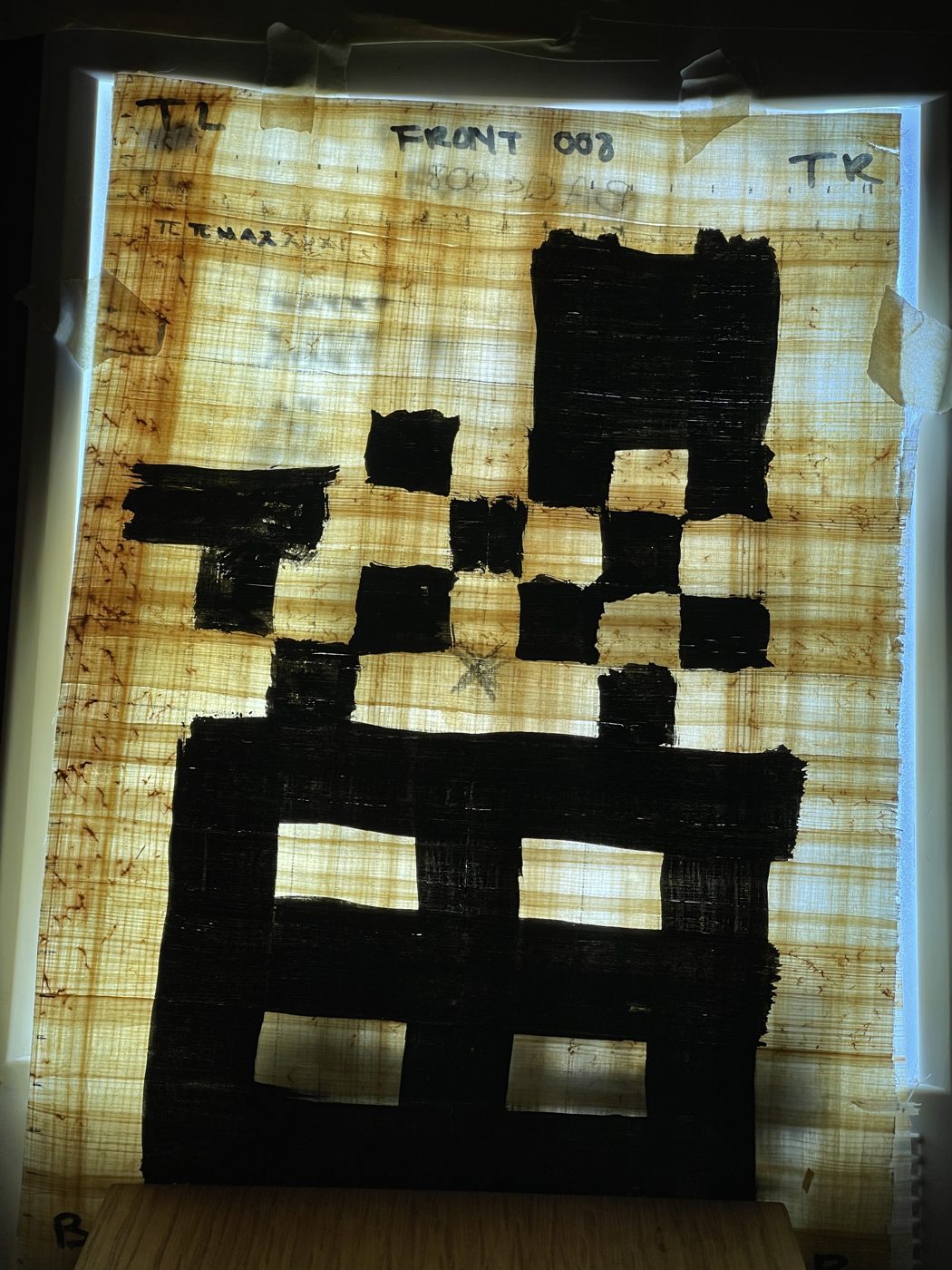
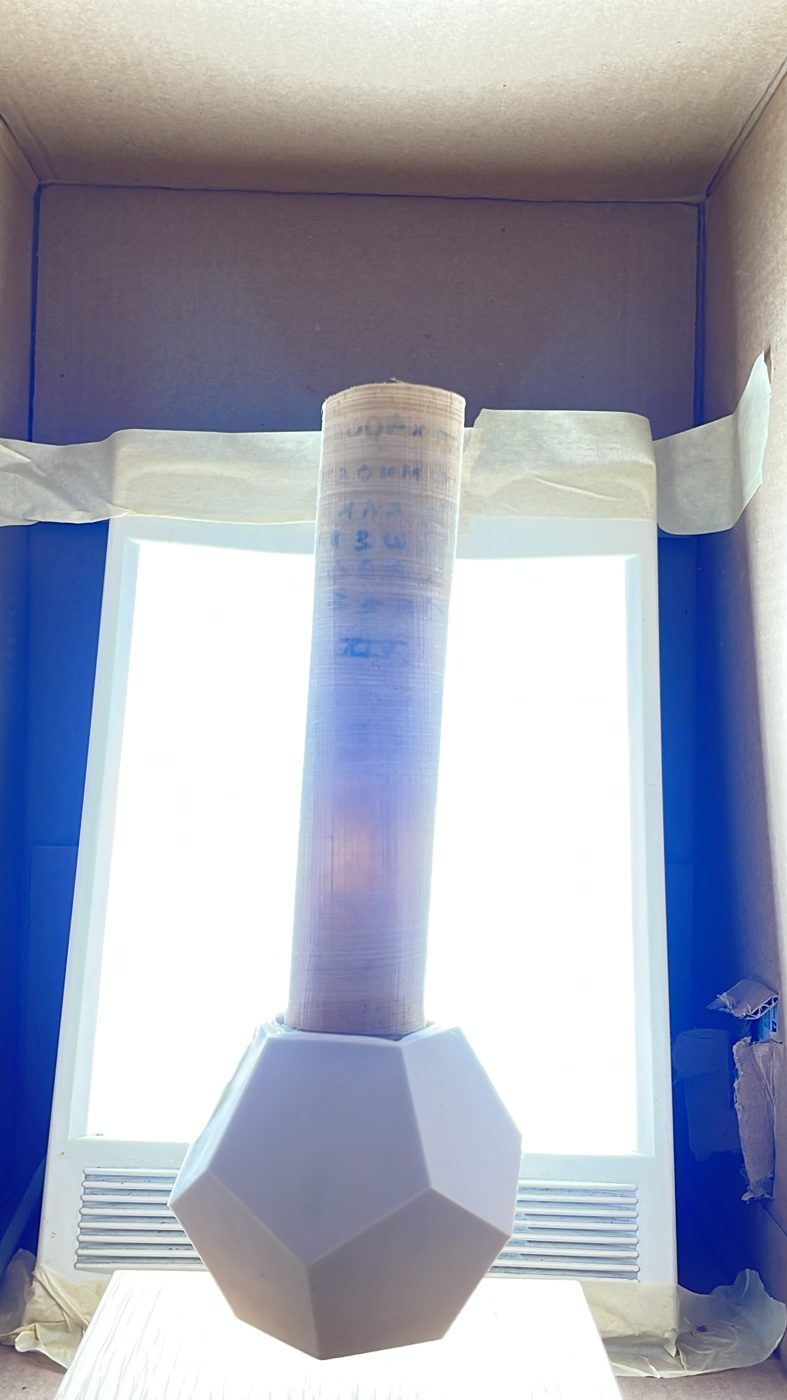
I don't have a particle accelerator. I had an Amazon box, a SAD lamp, and a levitating planter.
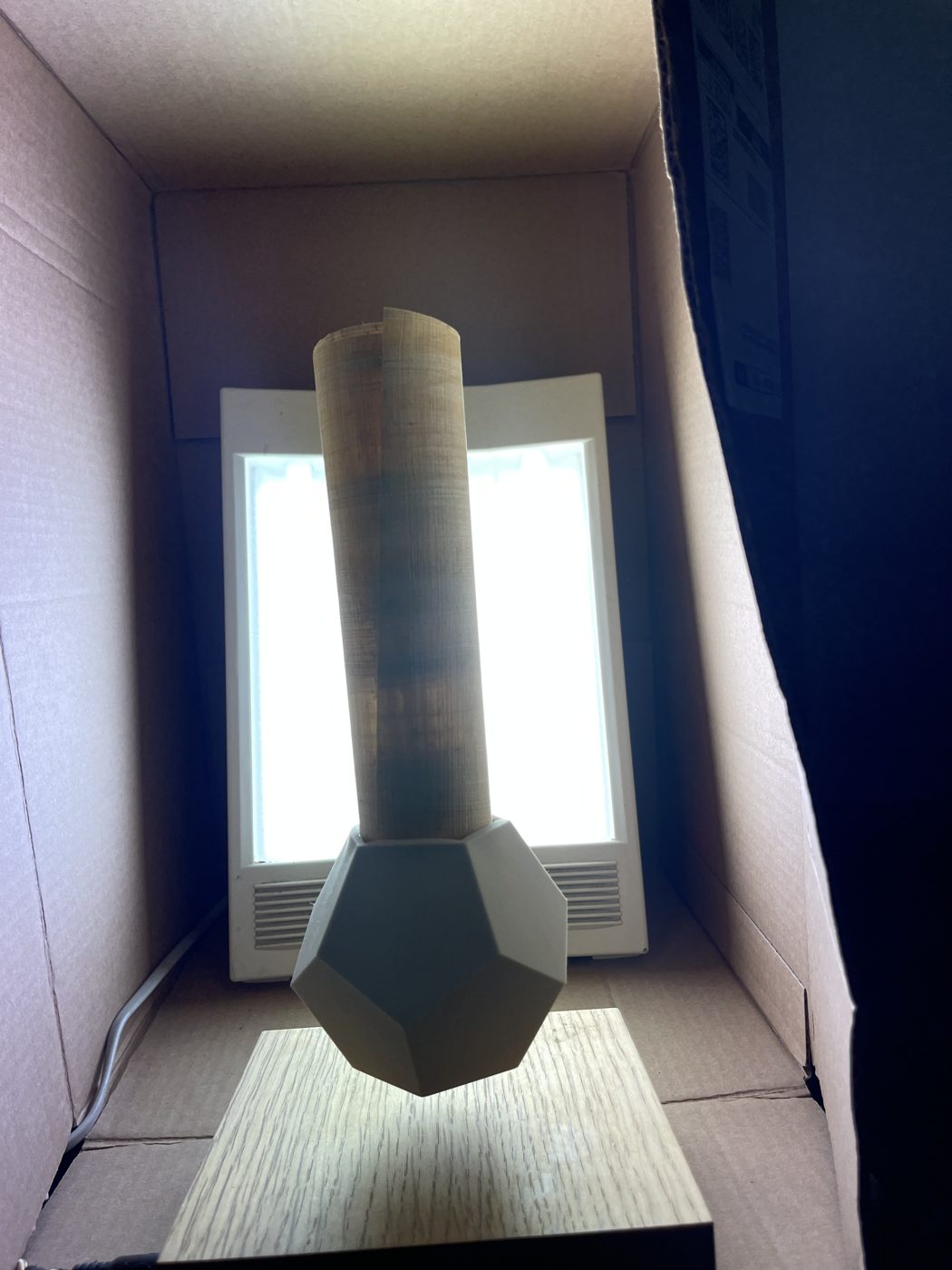
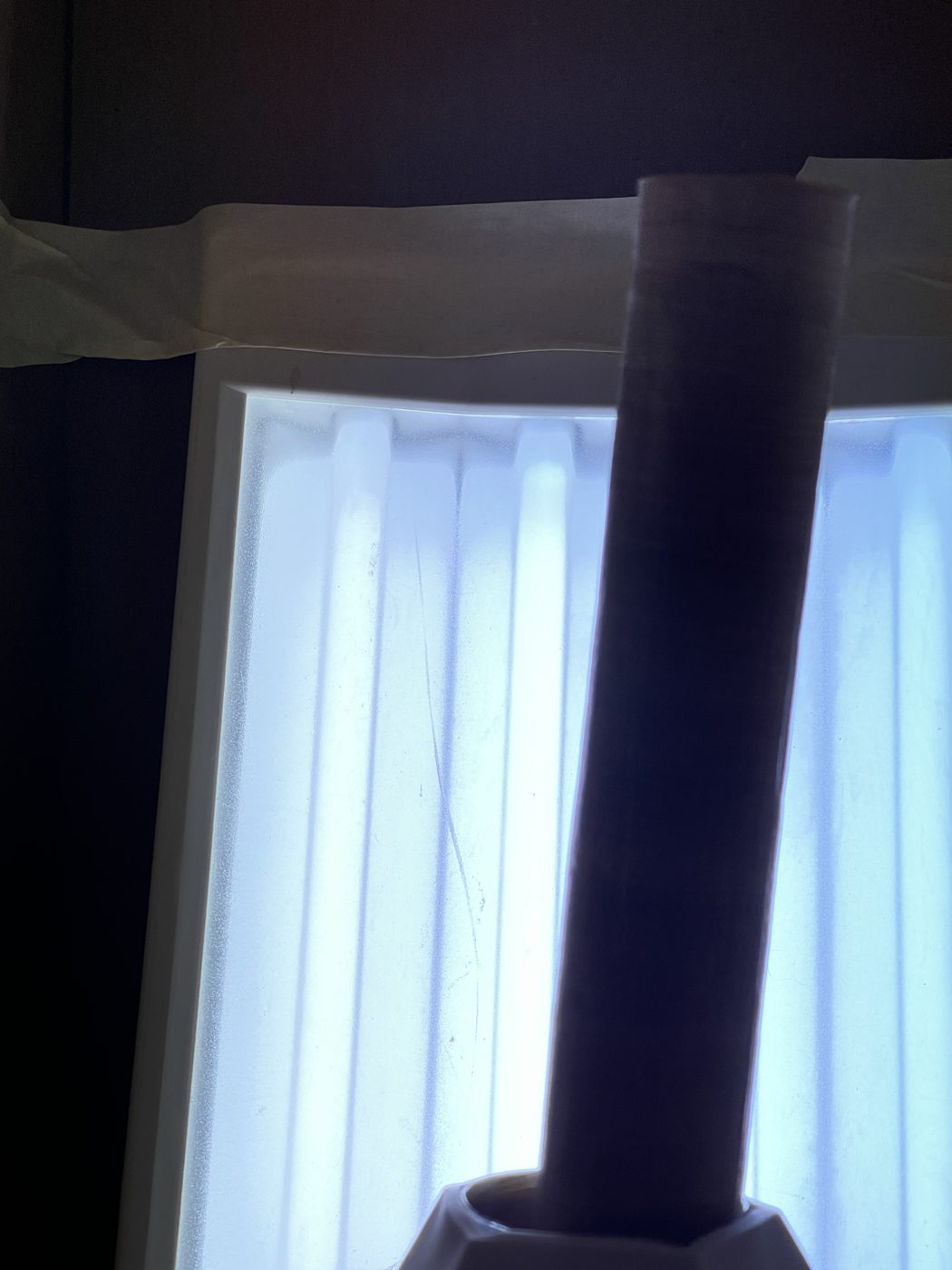
A light box is the cheap version of the real thing. A CT scan shoots X-rays through the scroll from every angle. I can't see through a rolled scroll with light, but I can see through one layer of papyrus, and turning the scroll means the camera gets every side without me touching it.
A sun lamp, for a scroll that hasn't seen the sun since AD 79. It felt right.
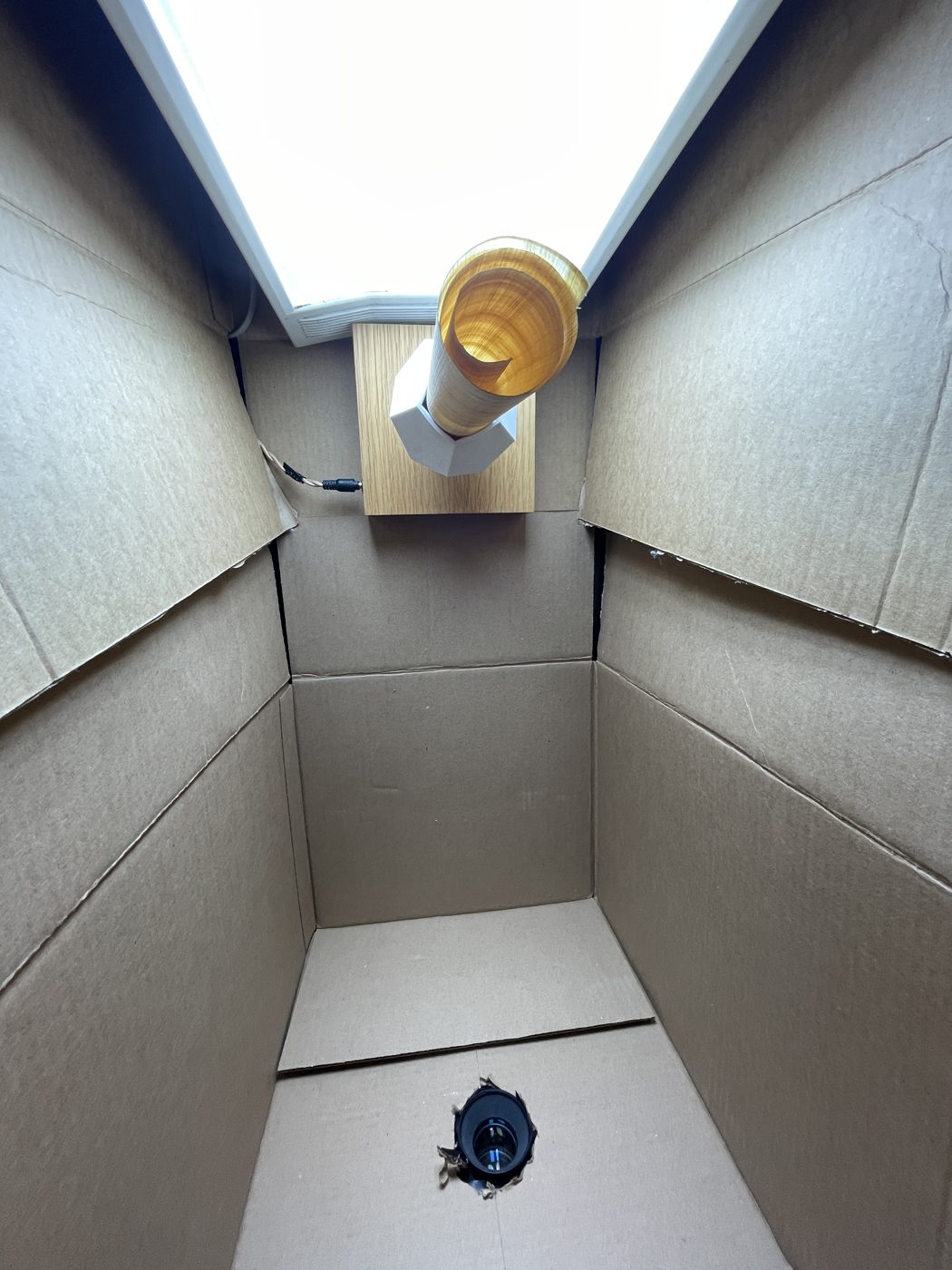
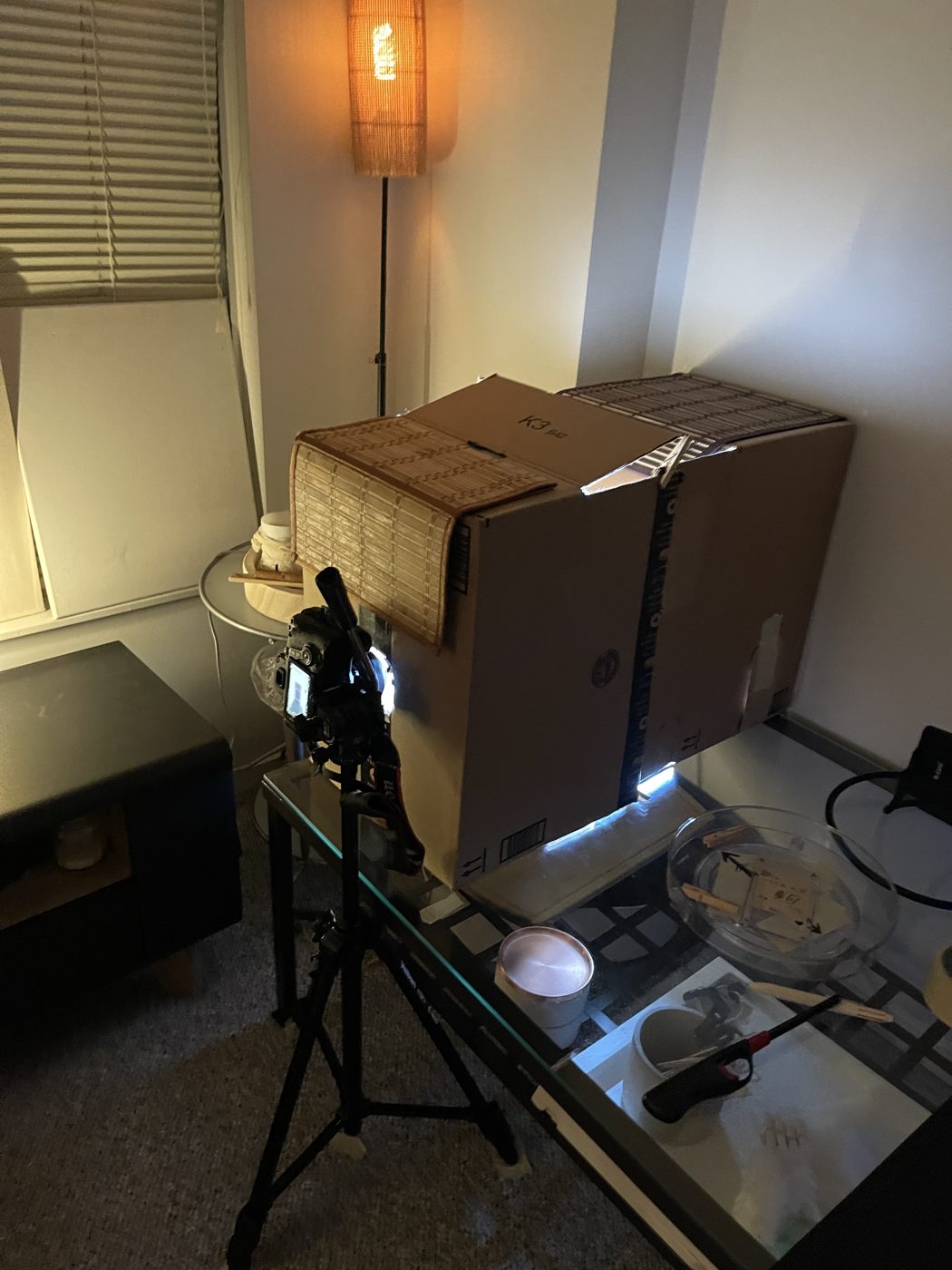
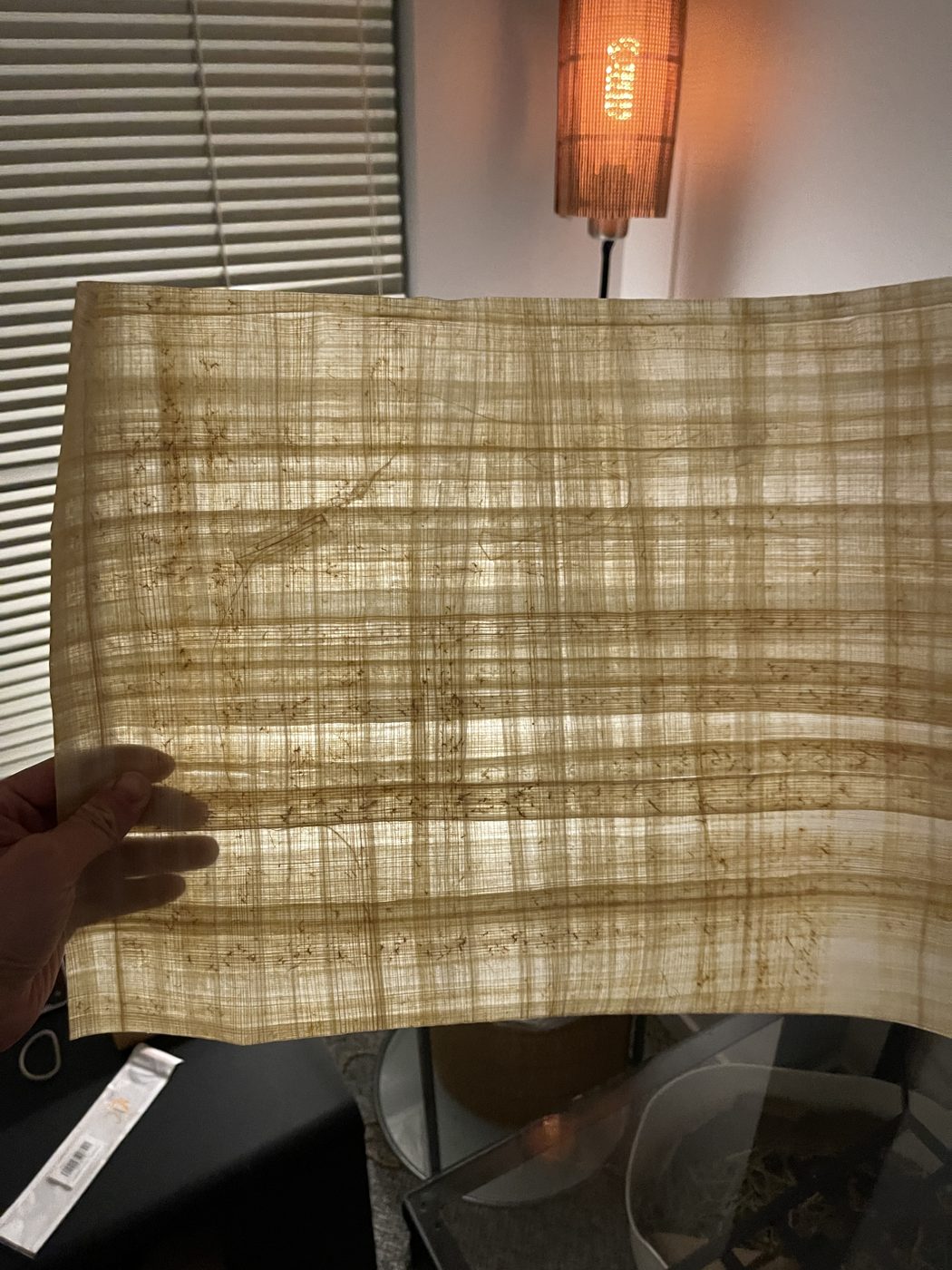
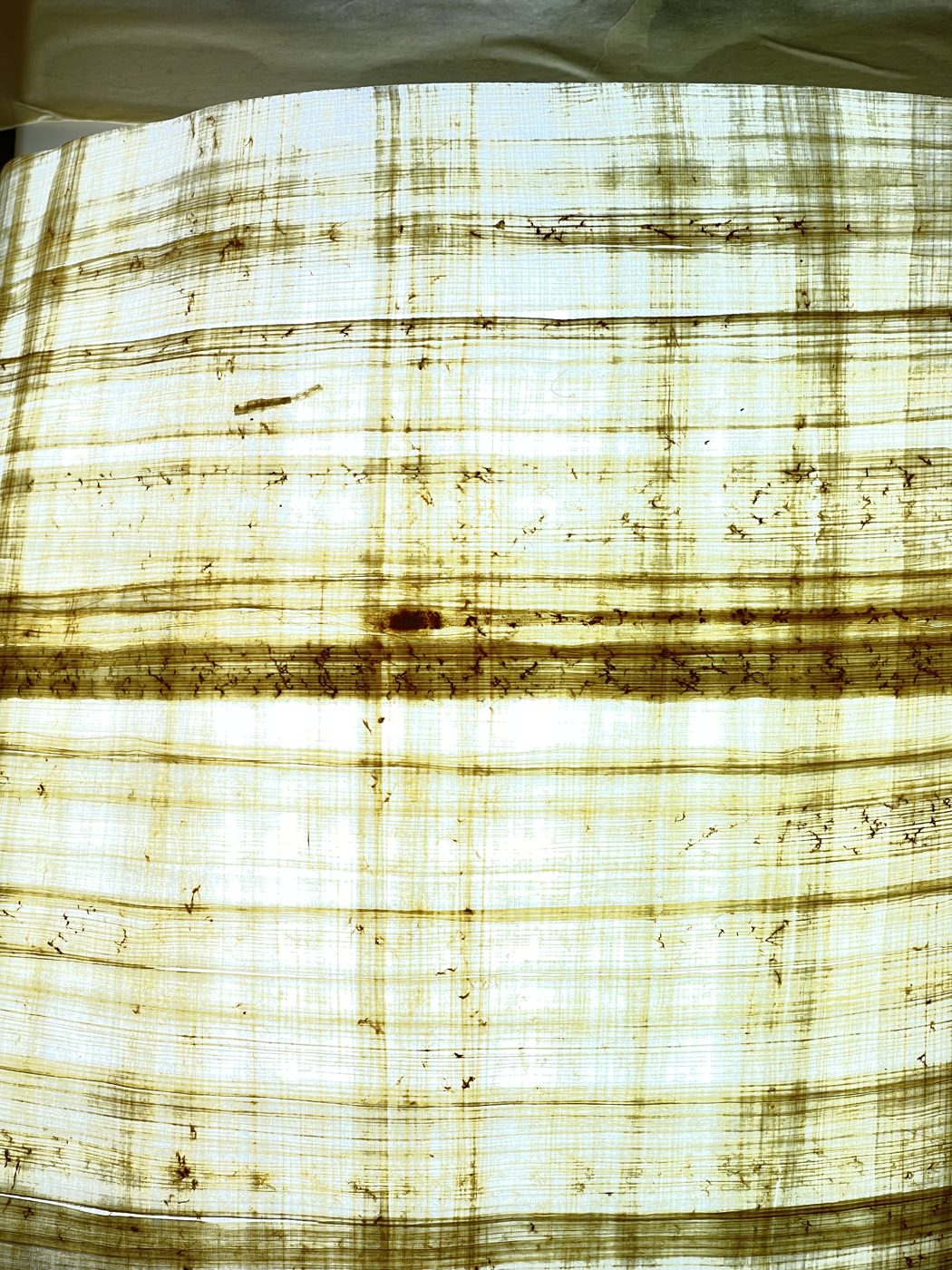
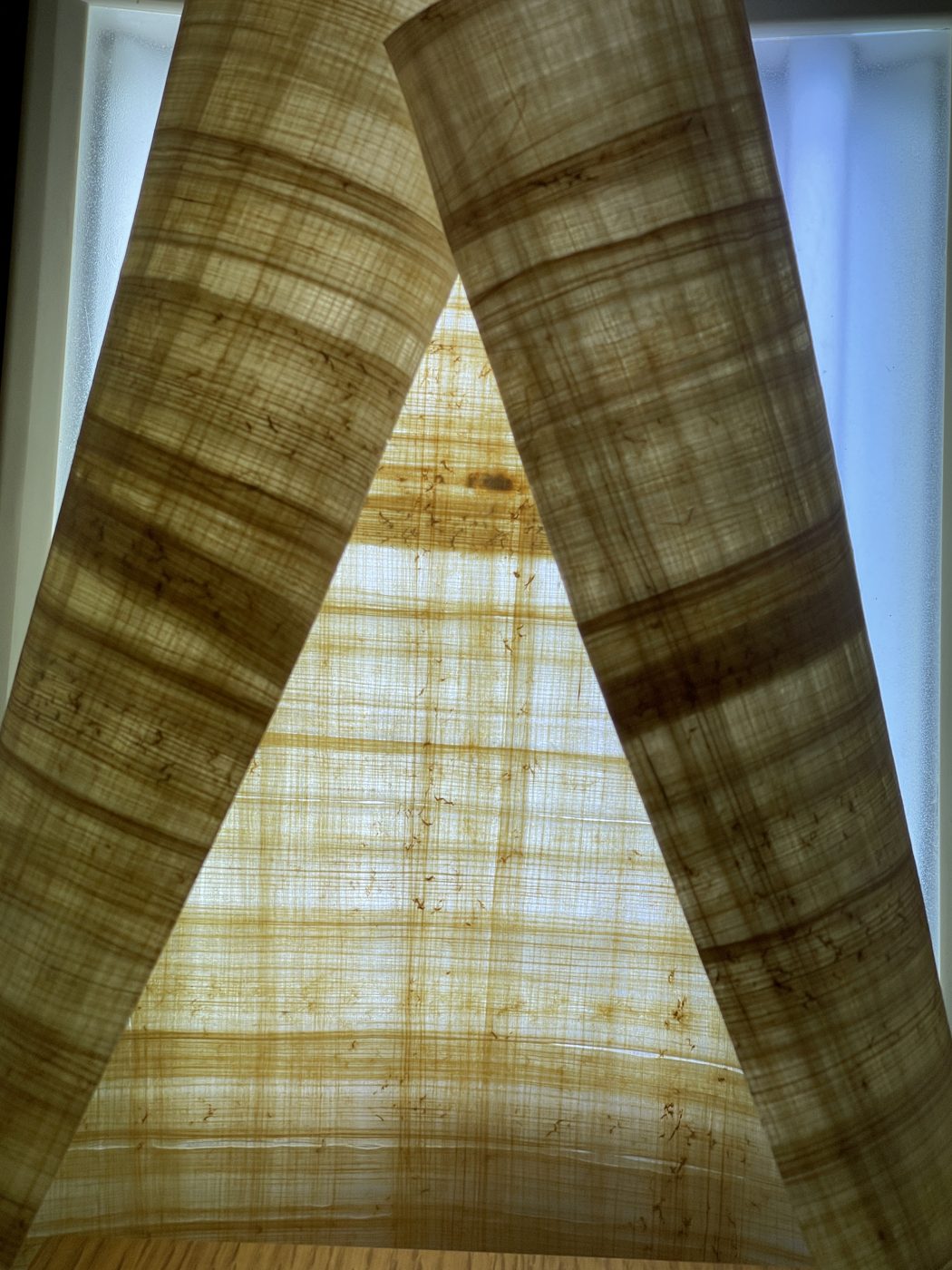
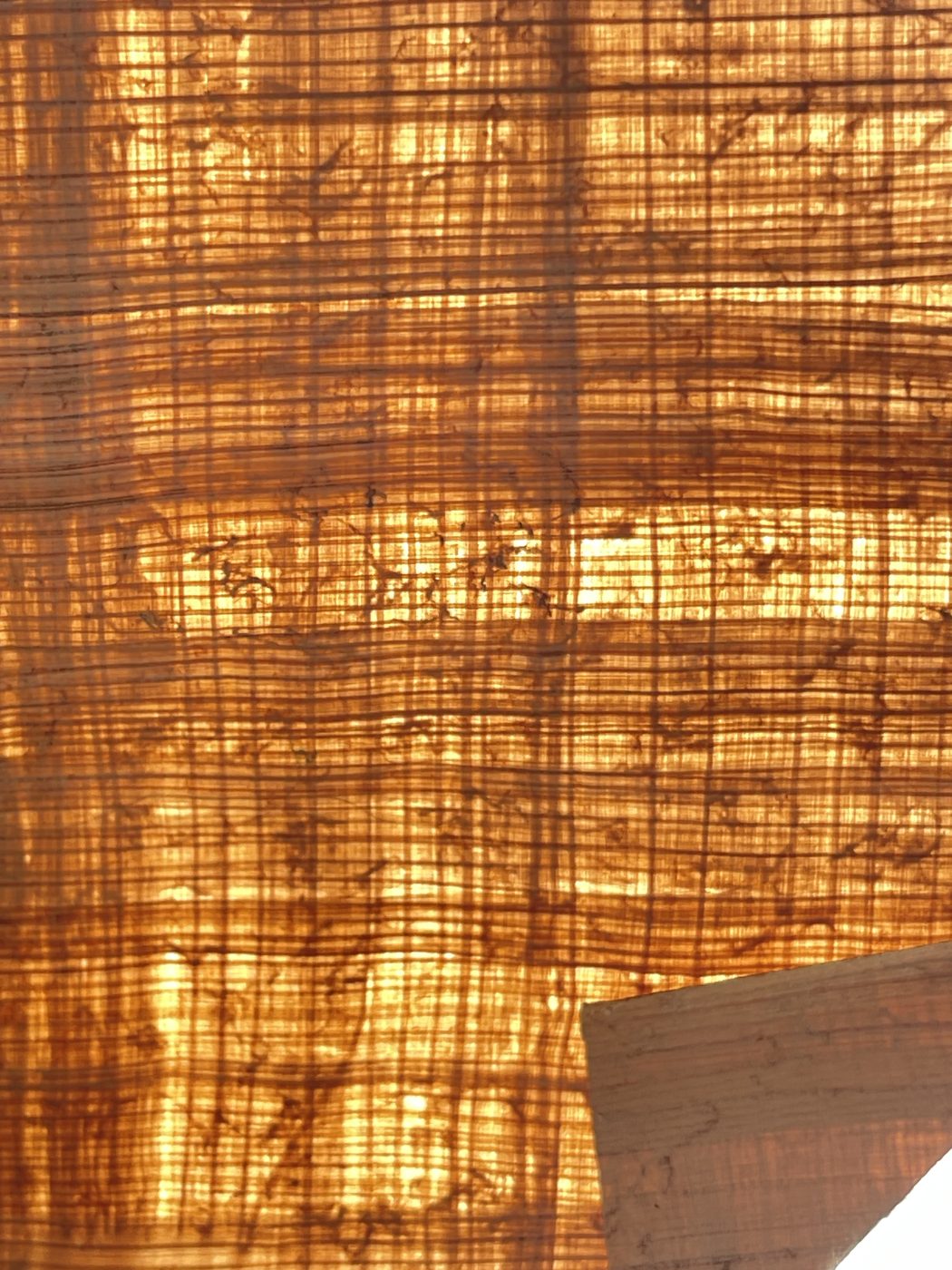
Backlit, papyrus stops being a sheet and turns into a grid. Horizontal strips over vertical strips, thick and thin, with dark knots where the plant was. Ink sits on top of all that, and from far enough away the fibres look a lot like writing.
That was the first real thing I learned. Much of what looks like ink is just the papyrus. Its own texture is a signal, consistent the way skin is. So a model that knows what blank papyrus looks like might matter as much as one that knows what letters look like.
A real scroll got hit by a pyroclastic surge at a few hundred degrees. I had an air fryer.
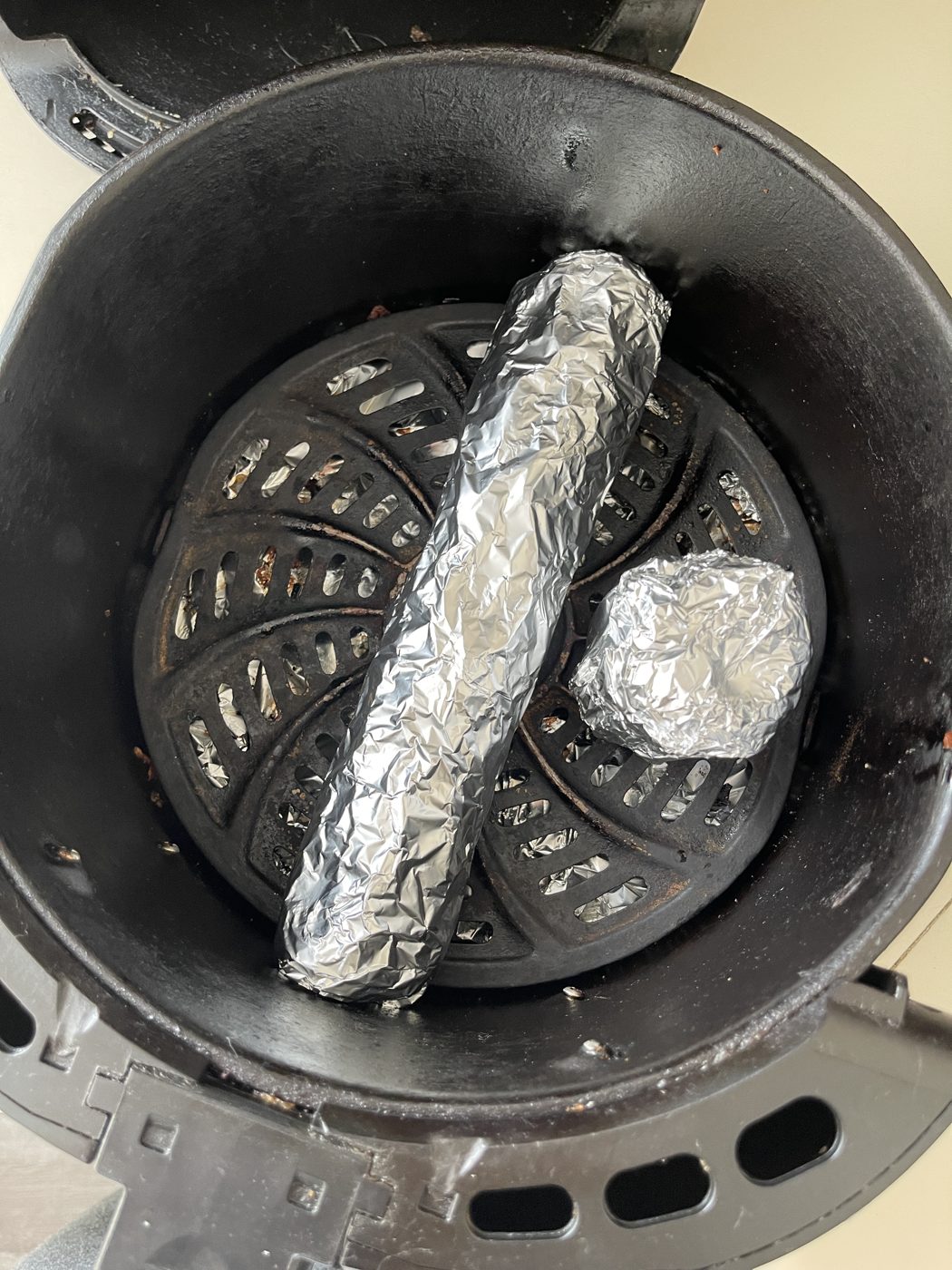
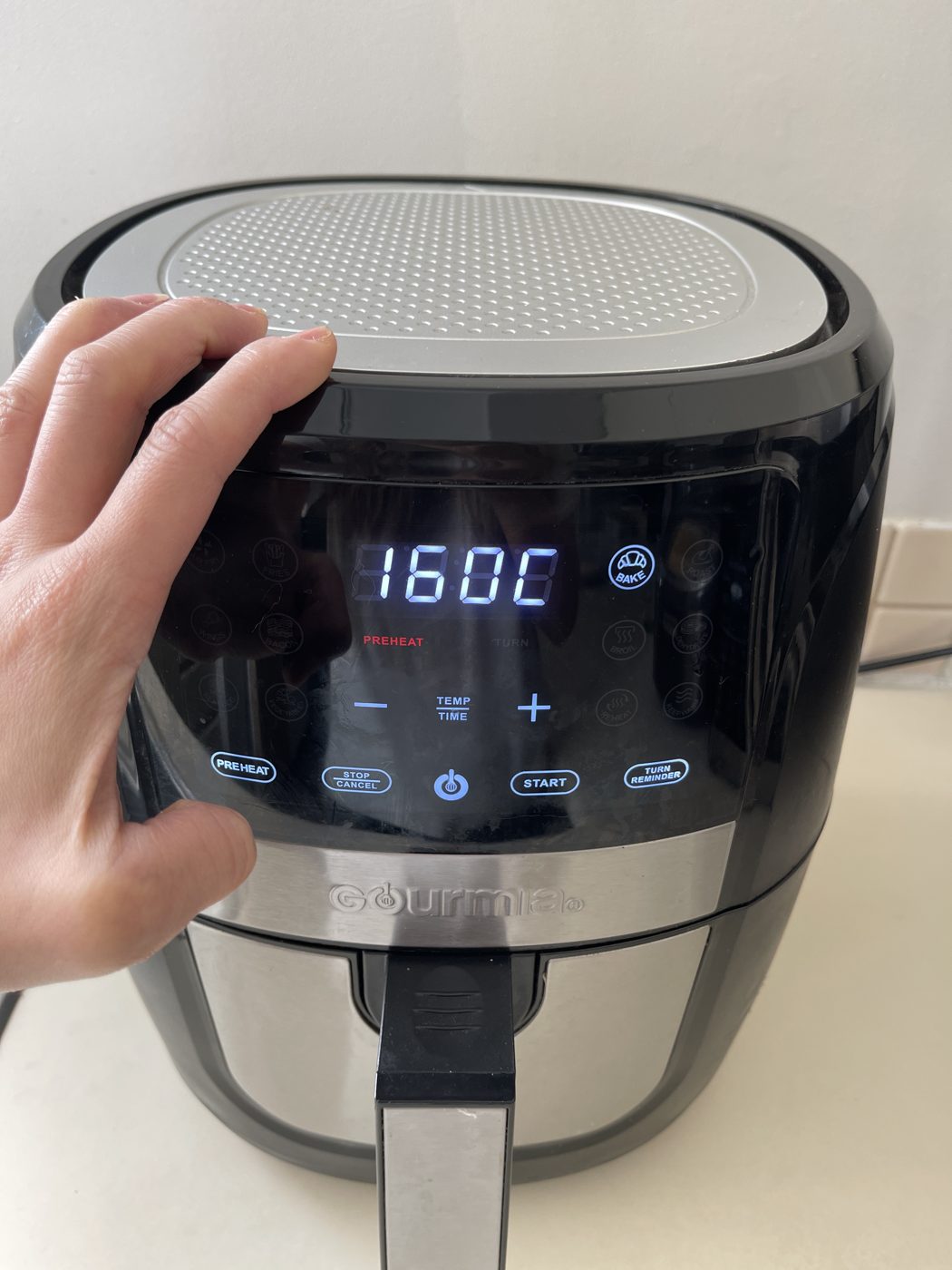
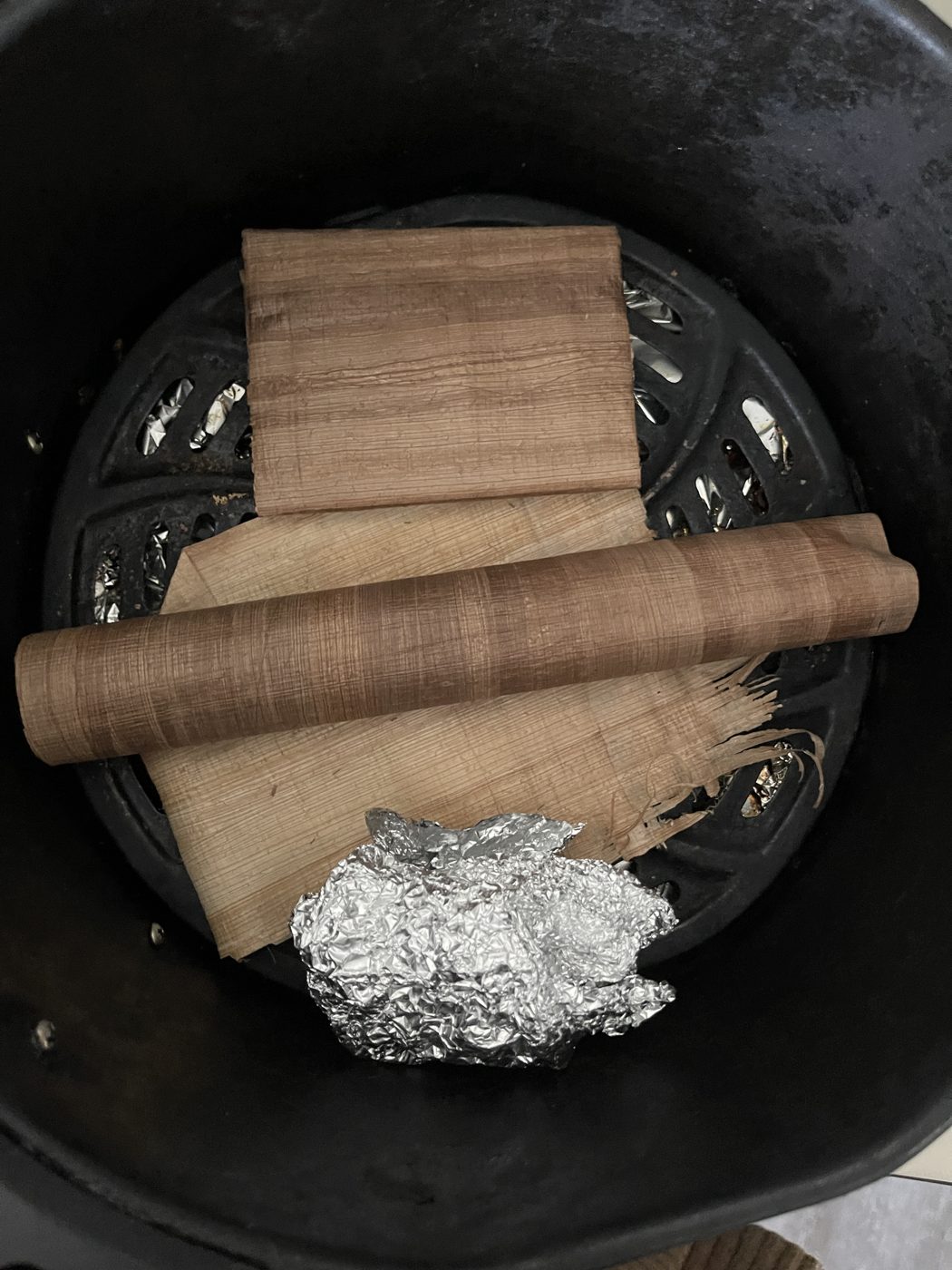
Foil keeps the oxygen out, so in theory it chars instead of catching fire, which is roughly what happened in Herculaneum. I labelled the pieces before they went in (V.V, 5.5 cm), set it to about 375°F, and left it for hours.
It didn't turn to charcoal. It toasted. The scroll came out the colour of a cinnamon stick, and the papyrus started splitting into its layers, the way the real ones flake.
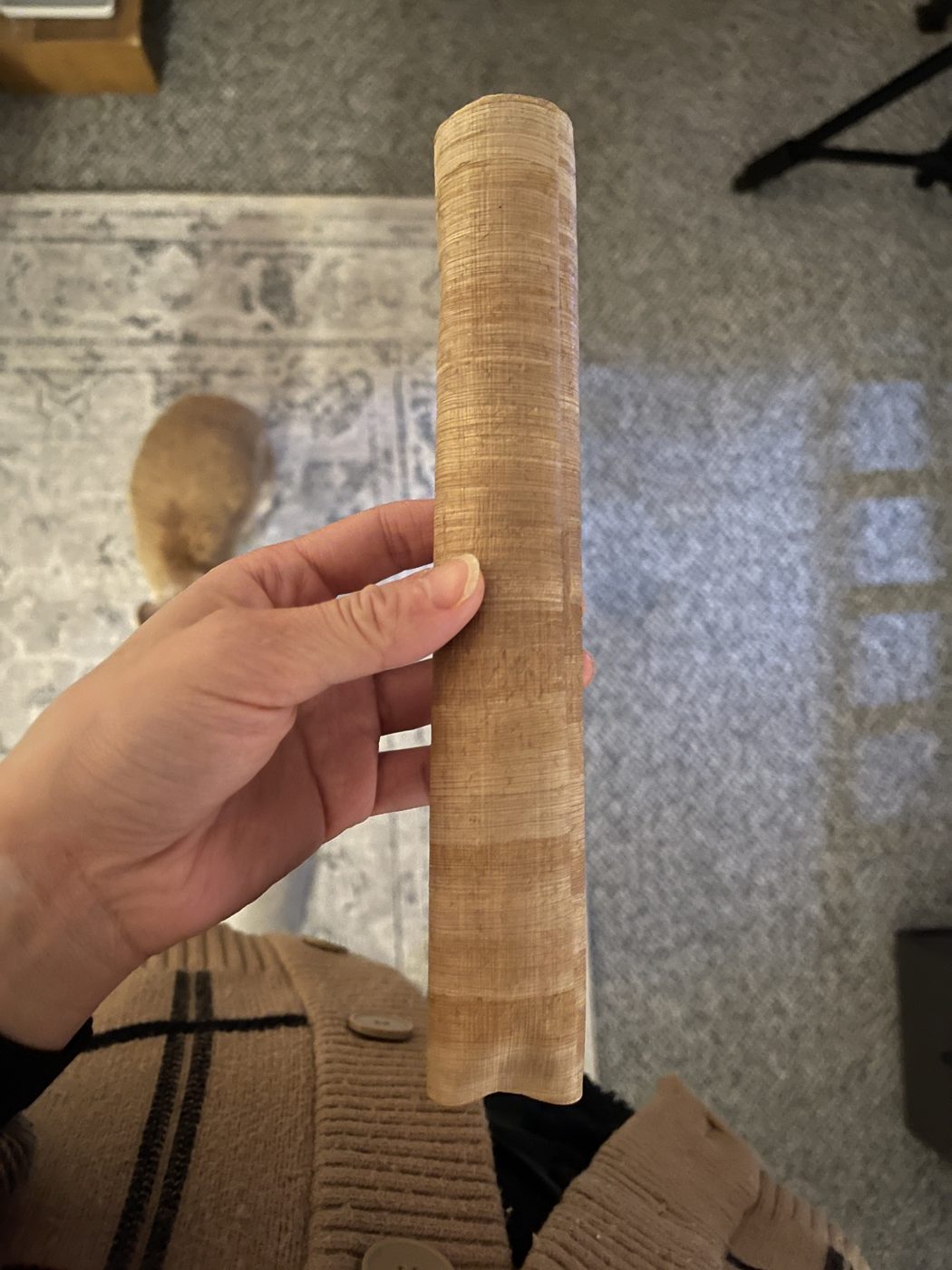
But the ink survived. Every letter. Carbon doesn't care about 375°F.
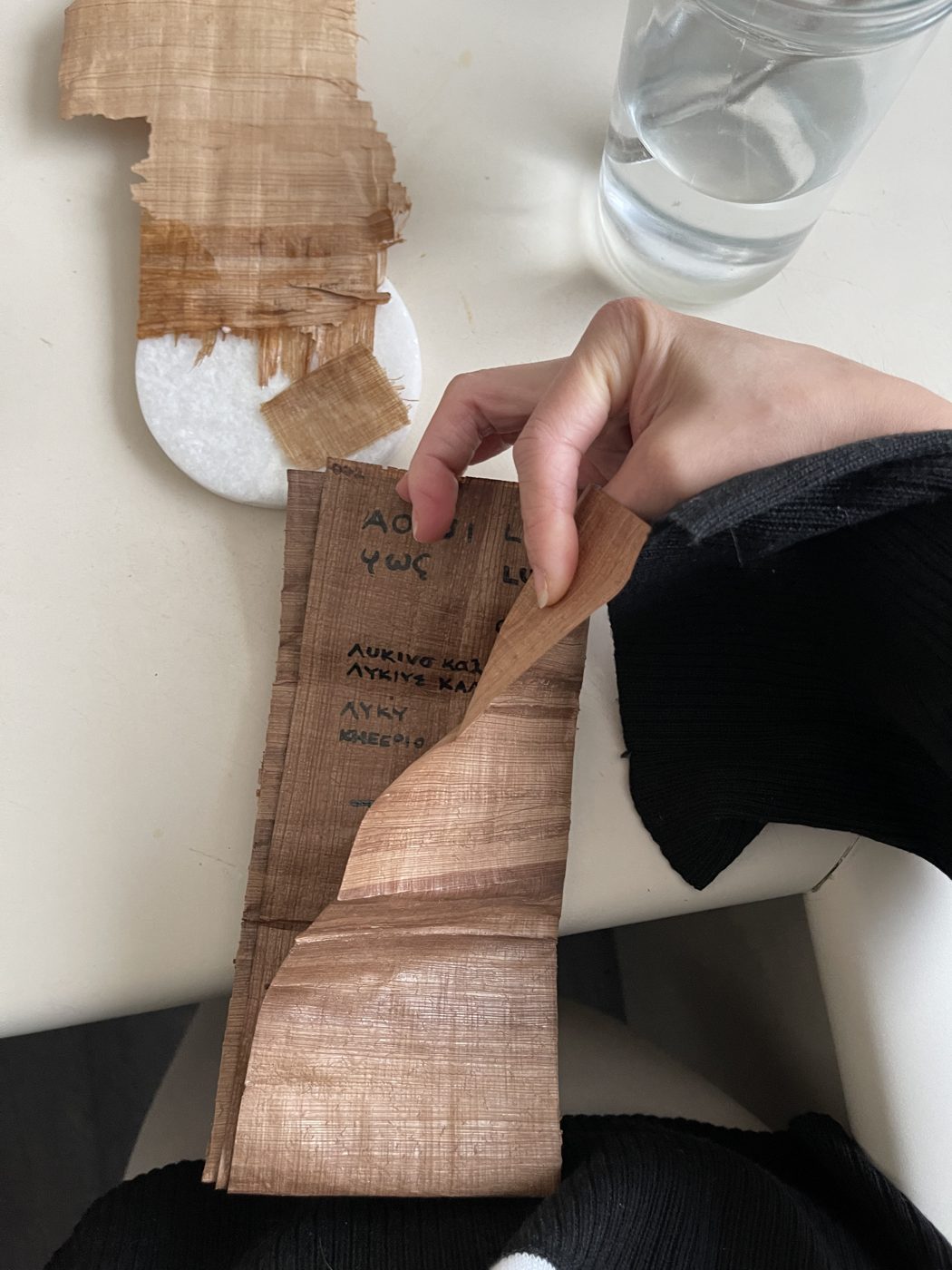
The fryer didn't survive, sort of. It worked fine, but it smelled so strange afterwards that I didn't trust it with food again, so I bought a new one. If you're keeping score: one fake scroll, one air fryer.
This was the actual point. The models learn from ground truth, places where we already know where the ink is, and there's very little of it. A handful of fragments and a few hand-labelled letters.
So the idea was: if I wrote the scroll, I know exactly where every letter is. Take the photos, make them look like X-ray or CT slices, and you'd have as much ground truth as you can make in an afternoon.
I swapped the phone for a DSLR, shot the sheets in the box, and pulled them into After Effects to grade them until they looked like slices from the scans.
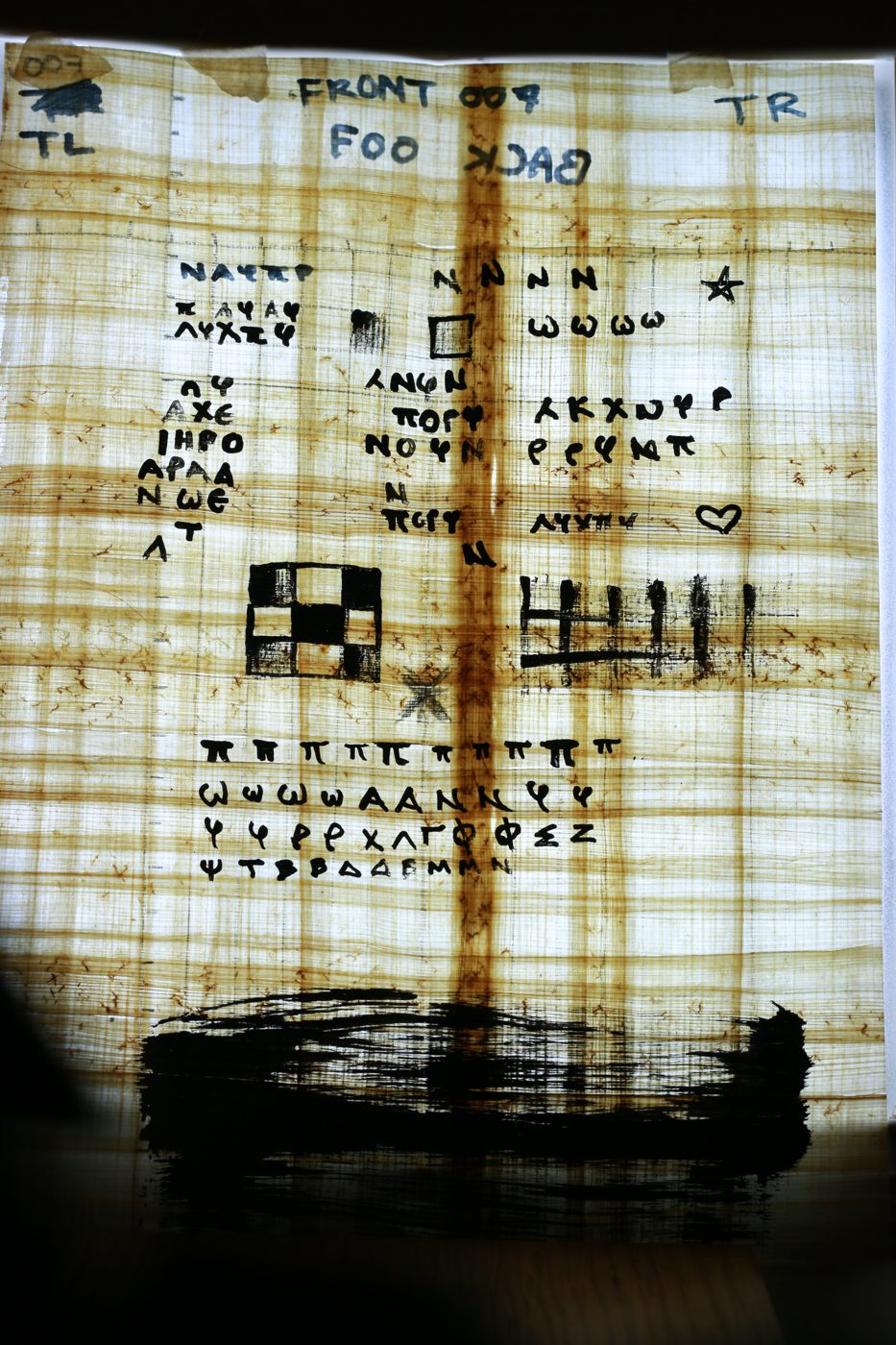
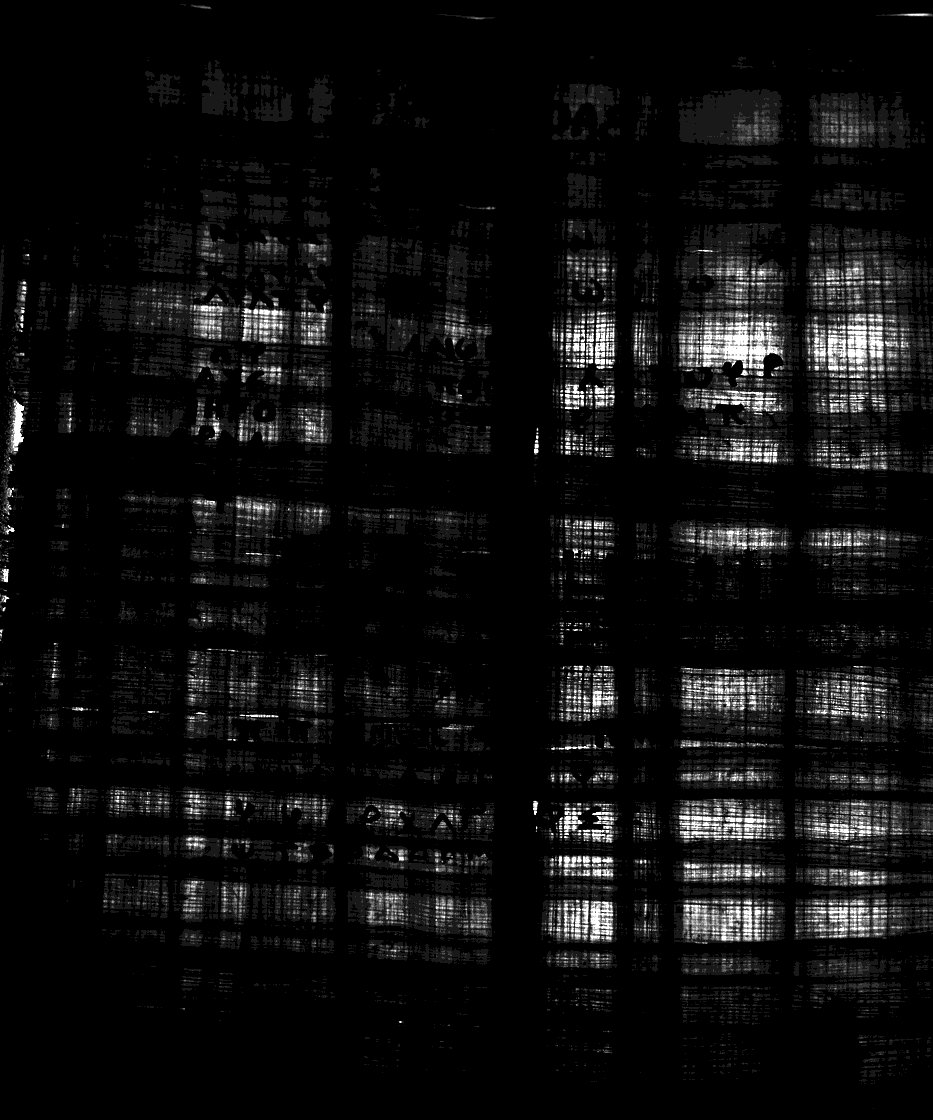
It didn't really work.
Put them side by side and you can see why. In mine, the fibre grid takes over everything, and the letters are dark blobs sitting on top. In the real scan, the papyrus is a soft grey noise and the ink isn't a shape at all. It's a texture, a crackle, slightly different from the papyrus around it. I'd made a photo that looked like a scan. I hadn't made something with the same physics.
I still think it was the right question to ask. And it changed how I looked at the real scans. The crackle wasn't just noise to me anymore. I'd watched my own papyrus do it.
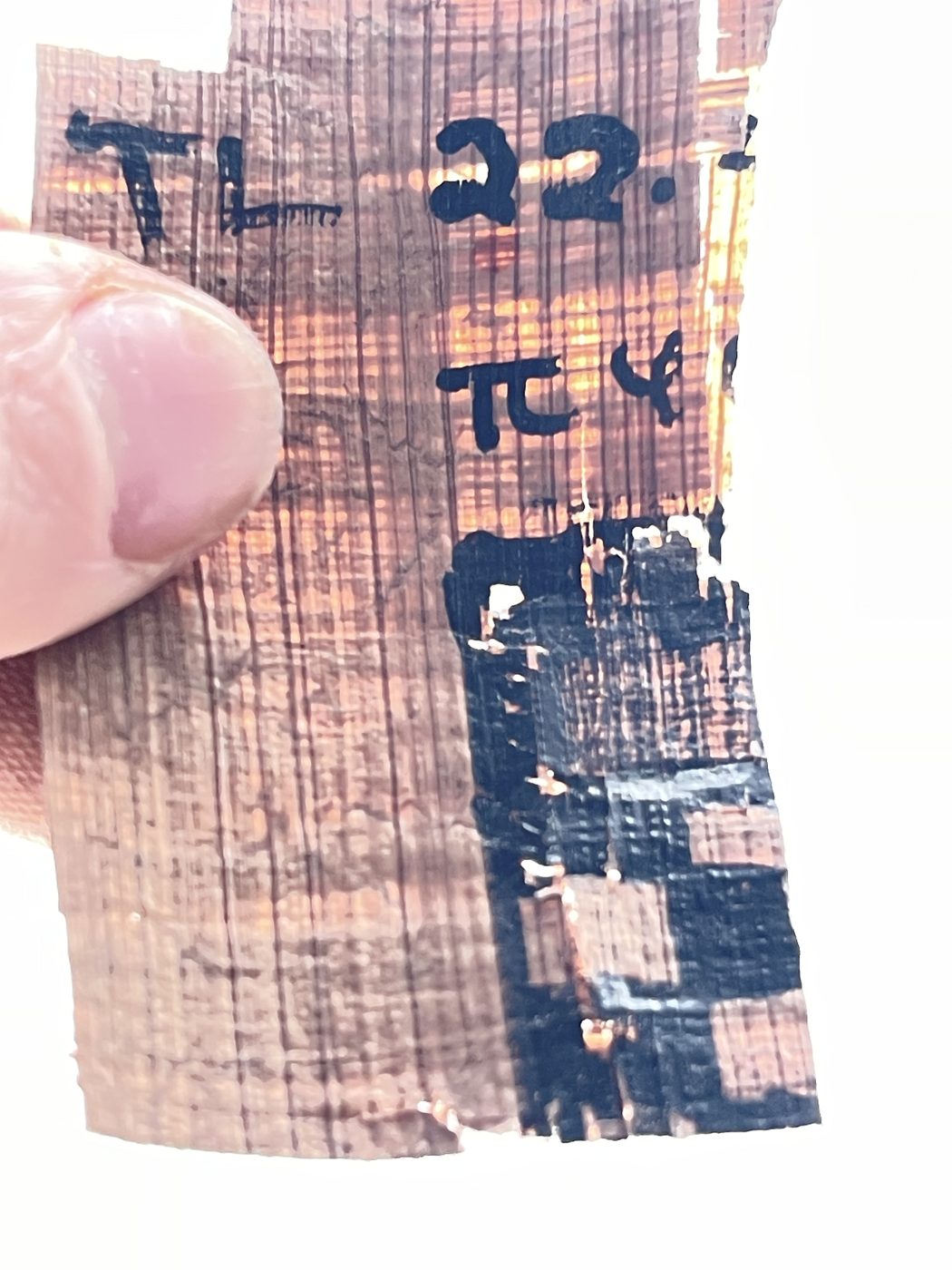
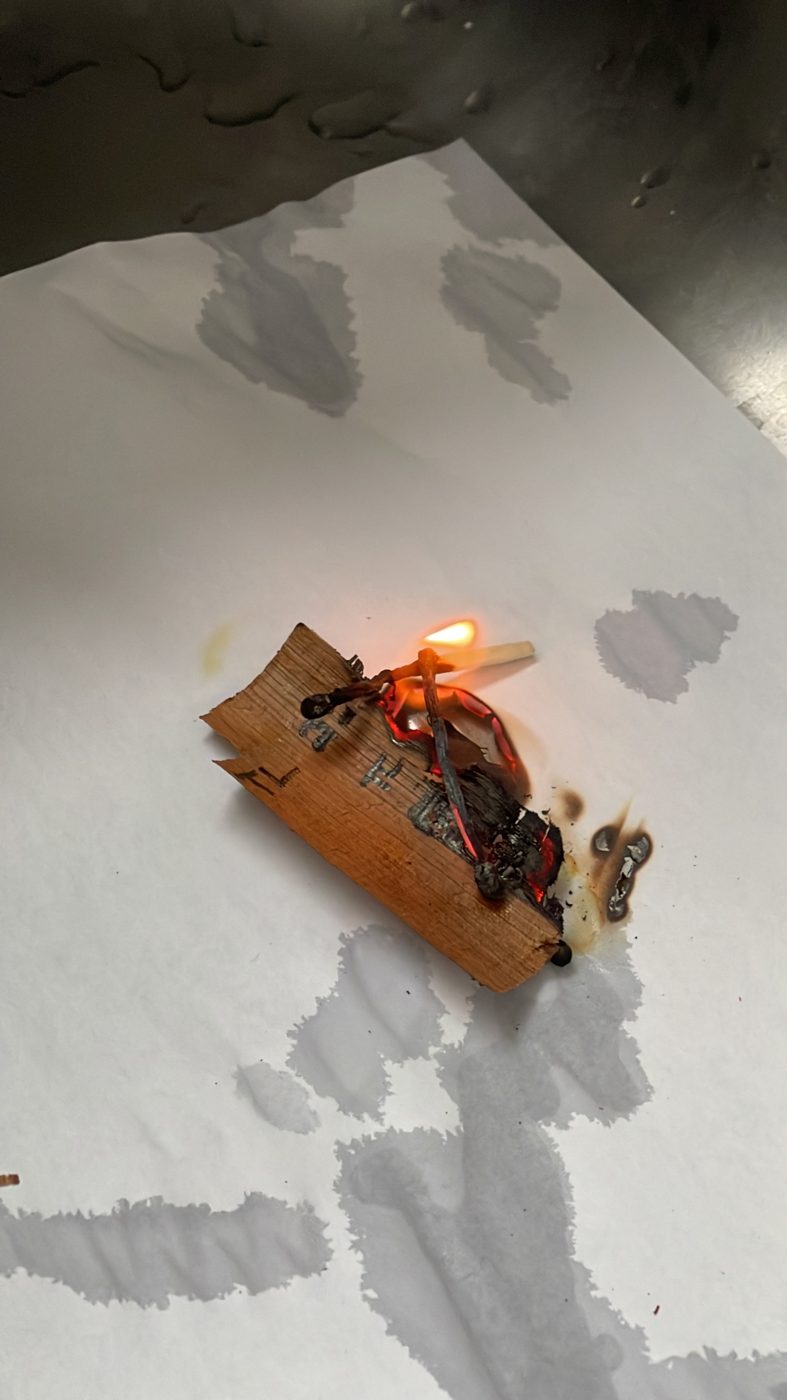
The air fryer was a gentle bake. Vesuvius wasn't. I wanted to see what an actual flame does to carbon ink on papyrus.
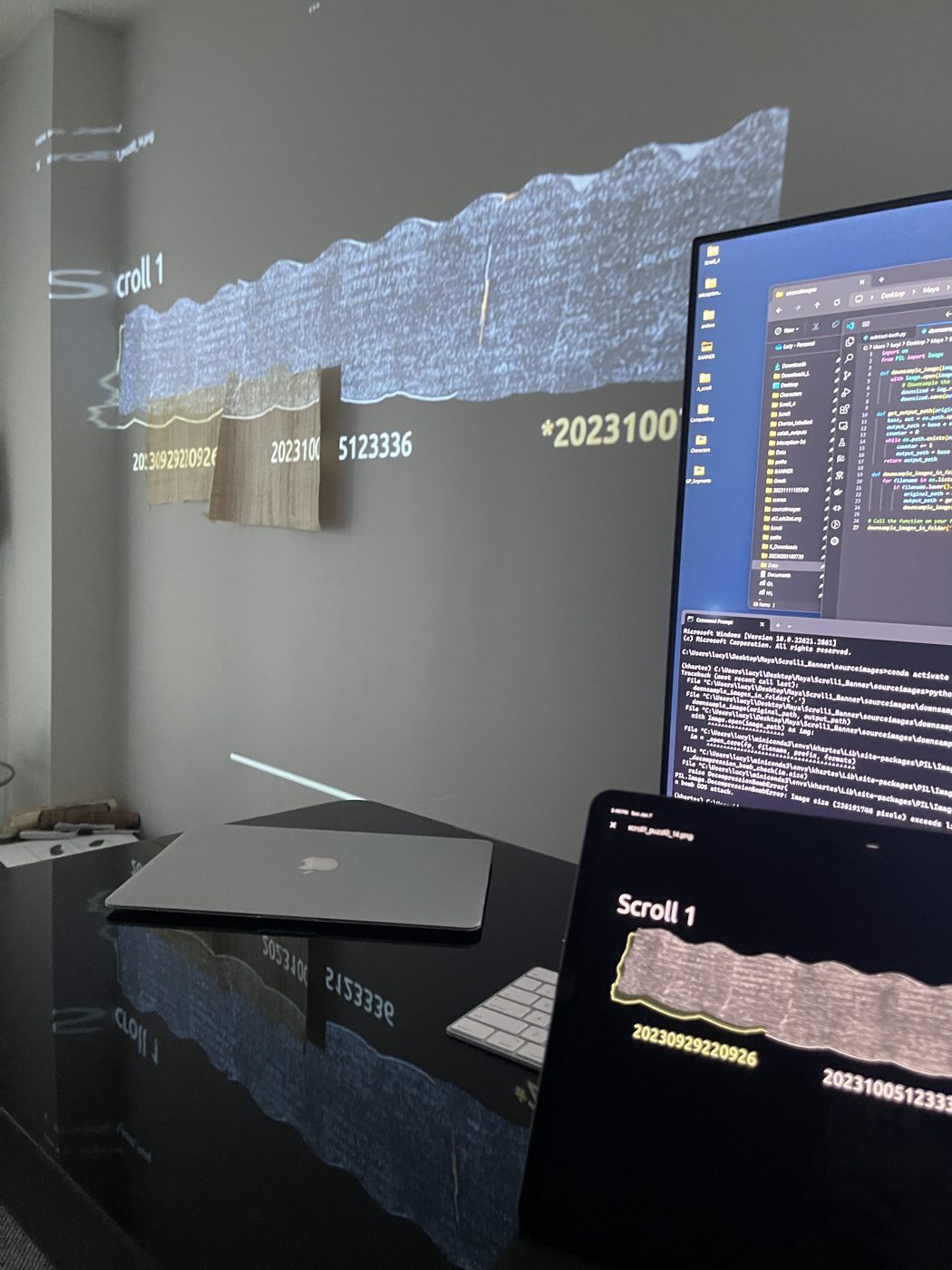
After all that I went back to the real scans.
These models are trained after us.
Made in our image.
Taught our languages, our stories, our data.
And it turns out the quickest way to understand what a model is looking at is to make the thing it's looking at. Badly, in an air fryer, with a cake joke on it.
Maybe that's the whole lesson. When something seems stuck in three dimensions, go and make one yourself. You'll learn which parts are hard and which parts are just folded.
Part 2: The Readers Before Us, what I learned from the people who tried to read the scrolls before us.